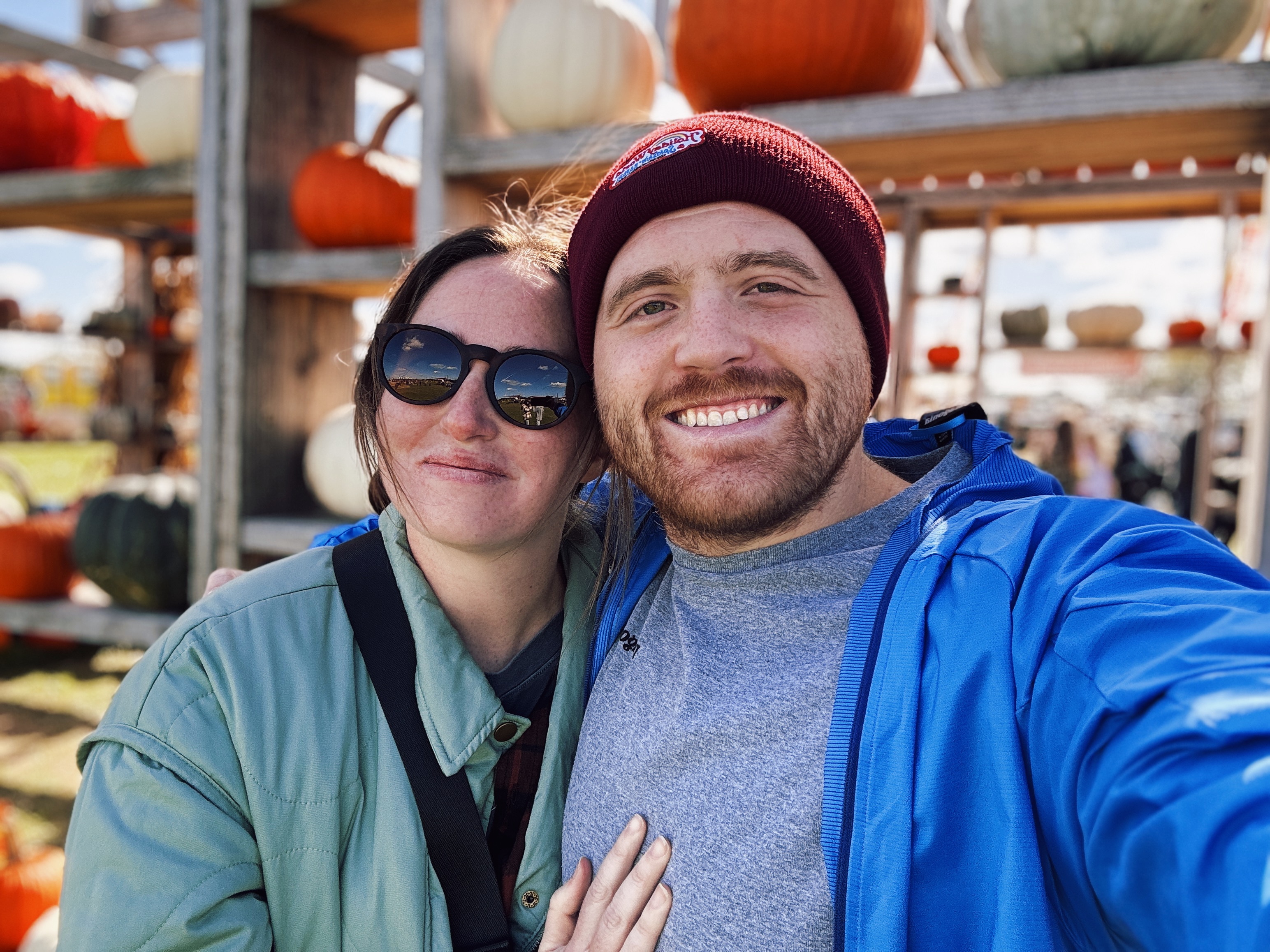
I’m a husband, new father, dog & cat wrangler, designer and writer . With a unique blend of design and determined attitude, I’ve been instrumental in growing businesses and brand identities.
My strength lies in accessible, user-friendly designs and crafting products people love. Working closely with CEOs, I’ve navigated a variety of challenges - from small business to Fortune 500 companies - always with a design first approach.
I thrive in the dynamic world where creativity meets business, creating experiences and products that delight and inspire.
“Caleb knows what he wants. He’s aware of a bigger picture and has an instinct that pushes him to gain a global perspective on what he does as an artist and as a human in general, the two respectively informing his work.”
— Dominic Scibilia, Mentor
Experience
designer & marketing lead, sepro, jan. 2024 - present
With a story focused mission and brand, I helped our users protect, preserve and restore millions of acres of nature. Working across multiple divisions of the company—online, retail, government agencies, professionals and every day people my designs educated on proper aquatic care and environmental protection.
- Designed booklets, brochures, labels, other printed materials and digital collateral covering all aspects of SePRO’s divisions.
- Web Design that made for a modern user experience to best assist our new and existing users. As well as crafted digital assets for education and awareness social/online marketing campaigns.
- Managed the companies brand and vision across multiple communications and platforms to meet internal quality and regulatory standards.
- Collaborated with internal and external partners to ensure timelines were created and deadlines were met.
senior graphic designer, weaver, mar. 2022 - nov. 2023
I oversaw the new branding and messaging for the Trail’s End Popcorn Fundraiser. I collaborated with the CEO, Sales-team, and Marketing to develop a singular design guideline for the company.
- Developed promotions and marketing collateral during the annual sale.
- Assured brand consistency across all visual mediums.
- Produced product packaging and marketing materials such as guidebooks social media content, webinar videos, brochures, flyers, and e-mail campaigns.
graphic design lead, market district, sep 2015 - mar. 2022
Responsible for determining the creative direction of Market District’s core values, delivering high-quality visual assets aligned with company goals and brand, and conceptualizing and executing the designs and services of creative campaigns across Market District franchises.
- Working with many weekly, monthly, and quarterly deadlines.
- Communicate with co-workers, managers, and store leaders to design illustrations for promoting store products and services collaboratively.
- Creating the artwork for and installing displays for current marketing campaigns and brands.
teaching assistant, cia, 2012 - 2015
- Enhanced children’s learning environment in a classroom with hands-on and vocal education.
- Listened and communicated with all ages (and parents) to keep classes on track and under control
- Management of class resources and time, so classes went smoothly.
freelance designer, Aug 2015 - present
As a designer with a diverse skill set, I utilize the magic of Adobe Creative Suite, Affinity Designer, and Microsoft 365 (among others) to weave lasting, functional stories into visual experiences. Whether navigating the collaborative landscapes of major companies or nurturing local businesses, I thrive in dynamic settings fueled by teamwork, communication, and problem-solving. From crafting impactful branding to sculpting intuitive user journeys, my passion lies in translating complex problems into captivating visuals and narratives that resonate with diverse audiences. So, if you’re seeking a design partner who thrives on collaboration and breathes life into your vision, let’s unlock the magic together.
Skills & Expertise
- Branding
- Design Strategy
- User Interface
- User Experience
- Marketing Campaigns
- Editable Branded Collateral (Word & Adobe PDFs)
- Branded Presentations (PowerPoint)
- Research and Analysis
- 2D Animation
- Story Mapping and Wireframing
- Figma
- Adobe Illustrator, Photoshop and InDesign
- Adobe Premiere and After Effects
- Affinity Designer, Photo and Publisher
- Wordpress and Hugo CMS
- Mailchimp
- Graphite and Pastel Mediums
- Acrylic, Oils and Watercolor Paints
- Photography
- Tradeshow Booth Design
download a pdf version of my resume
Frequently Asked Questions
what is your design process?
I don’t follow a rigid, cookie-cutter process. Instead, I work from a set of foundational design principles that I check my work against at every stage. The road can meander, but the outcome must match the brief and serve the audience. My process revolves around three key phases: Research, Exploration, and Iteration, with a little Play thrown in throughout for good measure.
I intentionally keep my process open-minded and flexible to avoid unnecessary checklists and ensure it adapts to any project scope. This way, I can focus on the most important aspects as they emerge, rather than adhering to a generic checklist that may not apply to every project.
Research: I begin by aligning on the core message and auditing existing assets to identify strengths and pain points. I study competitors, consult stakeholders, and distill everything into a clear thesis that guides the project.
Exploration: With the strategy in place, I dive into creating wireframes or storyboards, defining visual styles, and developing reusable elements, all while keeping the core message front and center. I explore different tones and approaches to turn strategy into tangible, engaging visuals.
Iteration: This phase has two parts. First, I work collaboratively to take and test feedback and finalize the design and/or campaign. Then, if necessary, I follow up to dissect data and talk with users and consumers to inform any further iterations in follow-up designs or campaign pivots. This ensures that the final designs and campaigns are not only visually compelling but also practical and effective both at launch and over the course of the designs use.
Play: Creativity thrives when you let loose, so I always make room for experimentation and wild ideas during any phase of the design process. I keep Legos and other fidget toys around my desk to let my mind wander and house plants (My monstera, golden pothos and ivy are like family) to tend to for a quick brain break. Stepping away to socialize is also key as you never know when sharing and playing with others will spark the next big idea and take your designs to the next level.
how do you make design decisions?
Deciding on layout and elements begins with understanding the project’s goals, audience, and messaging. I establish a clear visual hierarchy that guides the user’s eye through the content logically and engagingly, starting with a solid grid structure for alignment and consistency. This foundation ensures balance and coherence across all design elements.
I carefully select typography, spacing, and color palettes that align with brand guidelines while supporting readability and visual appeal. When specific instructions are provided, I integrate them thoughtfully to meet project requirements without compromising usability or aesthetics. For interactive elements, I prioritize intuition and accessibility, ensuring seamless navigation.
Throughout the process, I test different layouts/variations and gather feedback to refine the design. The goal is to create a cohesive, functional, and visually compelling design that effectively communicates the intended message while adhering to brand standards and project specifications.
how do you take feedback?
I believe feedback is a crucial part of the design process, and I approach it with an open mind and a listening ear with a focus on understanding the heart of what someone is saying. When I receive feedback, I actively listen to grasp not just the words but the underlying reasons and concerns. Even if I don’t initially agree with a suggestion, I explore how it might look incorporated because that process often sparks new ideas and brings the design together in unexpected ways.
That said, I also balance collaboration with design principles. If feedback conflicts with brand guidelines or compromises accessibility for users, I’ll respectfully push back and explain why those aspects are important. My goal is to create designs that are both visually compelling and functionally sound, so I always aim to find a solution that honors the feedback while staying true to the project’s core objectives.
what's your go-to design snack?
When I’m deep in a design project, you’ll usually find me munching on pretzels or Goldfish crackers. And when the pressure’s on during major projects, I treat myself to a sour gummy worm or two. There’s something oddly satisfying about balancing stress with a little sweet-and-sour indulgence.
how do you keep your work fresh?
Keeping my work fresh comes down to play, both in and out of the studio. I have a variety of creative hobbies that help me stay inspired and open-minded. I write and illustrate picture books, mold clay, paint miniatures, and even enjoy watching others clean and upkeep vintage watches. There are also times when I’m studying what others are creating and socializing with them to feel inspired in the work of fellow creatives. Beyond that, I love getting outdoors, hiking, tending to my garden, reading a fantasy or science fiction novel, playing board games, and puzzles of all kinds from jigsaw, Puzzmo, or even escape-rooms.
By keeping my interests wide and taking active breaks to dive into these activities, I give my mind and energy a chance to rest and recharge. This variety fuels my inspiration and motivation, ensuring that my design work stays dynamic and full of fresh ideas.
what specific tools do you use?
For most of my projects, I rely on Adobe InDesign because it offers the flexibility I need, especially for variable data and interactive documents. My illustration background means I’m also proficient in Adobe Illustrator and Photoshop, which come in handy for creating custom graphics and refining visuals.
Beyond the Adobe suite, I work with a variety of other tools depending on the project. For design collaboration and prototyping, I use Figma. For video editing, I turn to Adobe Premiere. To keep everything organized, I use Asana for project management and Microsoft Word, PowerPoint & Excel for documentation. Having a broad toolkit allows me to tackle any design challenge efficiently and creatively.
These are just the most popular programs I use, I’m familiar with many others and pride myself on having the flexibility to meet any project’s needs from a tool perspective.
My go to tools are, Musgrave News 600, Blackwings, Pentel P205, Pilot G2, and MUJI Gel to name a few.
how do you design for accessibility?
Accessibility is a fundamental principle of my design work. I ensure my designs are inclusive and usable by everyone by following established accessibility guidelines, such as WCAG (Web Content Accessibility Guidelines) and ADA compliance, and by incorporating best practices throughout the design process.
Additionally, I test my designs with real users, including those with disabilities, to gather feedback and identify areas for improvement. By integrating accessibility considerations from the outset and continuously refining my approach, I create designs that are not only visually compelling but also functional and inclusive for all users.
what's your favorite color?
I’m particularly drawn to jewel tones, rich reds, deep oranges, and lush jungle greens. These colors add depth and sophistication to designs, making them feel luxurious and vibrant.
However, my favorite is purple. It’s not a color I’m frequently asked to use, which makes it exciting to work with. Purple offers a unique balance of warmth and coolness, and its versatility allows it to convey everything from creativity to elegance, depending on the shade and context.
oddest inspiration source?
The cemetery. It sounds odd, and a touch morbid, but during college a professor would take us to Lake View Cemetery each month. He argued that a cemetery is an ideal spot for an artist: the flowers, trees, and shrubs create rich landscape possibilities; the statues, headstones, and architectural details offer endless study of form; and the quiet, contemplative atmosphere sparks a unique emotional resonance. Even the headstones themselves hold stories of names, dates, poems, or brief tributes that spark curiosity about the lives once lived. These glimpses into the past inspire reflection and often fuel creative ideas in unexpected ways. Whether you’re spiritual or not, there’s something profoundly moving about being in that space.
if not design, then what?
If I weren’t designing, I’d likely be in another field where I could solve problems and serve others. I could see myself as an art therapist for children, using creativity to support emotional/mental well-being.
If that answer is still too close to design, I’d probably be working with my hands in a wood shop, crafting meaningful objects, or perhaps as a firefighter (this along with architect were the two jobs I most wanted to be when growing up), directly helping people in critical moments. Engineering is another path I’d consider, applying problem-solving skills to build and improve the world around us.
At the core, it’s about making a tangible, positive impact.
what's your opinion on AI?
While I’ve read enough sci-fi to be cautious, I don’t see AI as an existential threat. It’s just another tool. The hype feels over the top, especially when AI work is built on the backs of real artists, from designers to illustrators to authors and all in-between. For me, skipping straight to a finished product with AI is boring and lazy. Design isn’t just about the result. It’s about the problem-solving, experimenting, and learning along the way to get to a result. If I hit a gap, I’d rather learn and build the skill than take the shortcut.
That said, and even if I don’t use AI, AI does have its place. It’s great for handling repetitive tasks or sparking ideas you can build on. I see it as something that helps clear the busywork so creators can spend more time on the creative parts that matter. In the end, I think technology should support the creator, not replace them.